
Commercial Fire Alarm Installation in Lincoln & Lincolnshire
Professional fire alarm design, installation, upgrades and maintenance for businesses across Lincolnshire & surrounding areas, delivered by BAFE-certified specialists and installed to current BS 5839-1 standards
Contact our Fire Team Designed, Supplied & Installed
  Free Survey & Quotation
 Established in 1974
Commercial Fire Alarm Systems Designed Around Your Business
A commercial fire alarm is one of the most important life-safety systems within your premises. It needs to provide a reliable warning in the event of fire and be appropriate for the building, its occupants and the risks present.
As a BAFE-certified fire alarm provider, our team can design, install and commission systems in accordance with BS 5839-1:2025, the current code of practice covering fire detection and fire alarm systems in non-domestic premises.
From smaller commercial premises to large industrial sites, we can help with new installations, extensions, system upgrades, replacements and ongoing maintenance.
Whether you already know exactly what you require or need help understanding the options available, we can survey your premises and provide a clear proposal.
Need a new or replacement fire alarm?
New Fire Alarm Installations
We design and install new commercial fire alarm systems for a wide range of premises.
The appropriate system will depend on your building and the level of protection required.
We can work from an existing fire alarm specification or discuss your requirements following a site survey.
Ready for a new system? Contact Us for Your FREE Site Survey
- New commercial premises
- New-build developments
- Refurbishments
- Building extensions
- Change of building use
- Fire risk assessment recommendations
- Replacement of an obsolete system
- Businesses moving into existing premises
Fire Alarm Upgrades & Replacements
Fire alarm systems can remain in buildings for many years, but there eventually comes a point where continuing to repair an ageing system is no longer the best option.
We can assess the existing installation and advise whether it would be more appropriate to extend, upgrade or replace the system.
Ready to upgrade? Contact Us for Your FREE Site Survey
- The system is regularly developing faults
- The control panel is obsolete
- Replacement components are becoming difficult to obtain
- Your premises have been extended
- The layout or use of the building has changed
- Additional detection is required
- You have inherited an older system
- Your fire risk assessment has identified improvements
- You want to move to a more capable system
Fire Alarm Extensions
Your fire alarm should change with your building.
If you are adding offices, extending a warehouse, creating additional rooms or changing the way an area is used, the existing fire alarm may also need modifying.
We can assess your current system and, where technically appropriate, extend it to provide coverage for the altered areas.
Ready to extend? Contact Us for Your FREE Site Survey
Fire Alarm Takeovers
You don’t necessarily need to stay with the company that originally installed your fire alarm.
Lincoln Security can assess existing systems with a view to taking over their ongoing maintenance.
Before taking over a system, we will normally need to establish its condition and identify any faults or outstanding remedial work.
Want us to take over? Contact Us for Your FREE Site Survey
- Their current provider is no longer meeting expectations
- They want a more local service provider
- Their original installer is no longer trading
- They have moved into premises with an existing system
- They have acquired another site
- They want one company looking after multiple security and fire systems

What Type of Fire Alarm System Do I Need?
The most appropriate solution depends on factors such as:
- The size of the premises
- Number of floors
- Building layout
- How the building is occupied
- Fire risks within the premises
- Required fire alarm category
- Number of detection devices
- Existing wiring and infrastructure
- Interfaces with other building systems
- Future expansion requirements
Two of the most common commercial systems are conventional and addressable fire alarms.
Need Help Establishing Your Fire Alarm Requirements?
Lincoln Security specialises in the design, installation and maintenance of fire alarm systems. We don’t carry out fire risk assessments ourselves, but we can recommend an independent assessor who can assess your premises and identify the fire safety measures you may need.
Once you have your assessment, our team can work from its recommendations to design an appropriate fire alarm system for your premises.
Conventional Fire Alarm Systems
conventional fire alarm divides the premises into a number of detection zones.
If a smoke detector, heat detector or manual call point activates, the control panel indicates which zone the activation has occurred within.
Conventional systems can provide a cost-effective solution for smaller and less complex buildings.
Conventional fire alarms can be suitable for:
- Small offices
- Retail units
- Workshops
- Smaller warehouses
- Commercial units
- Small industrial premises
- Buildings with straightforward layouts
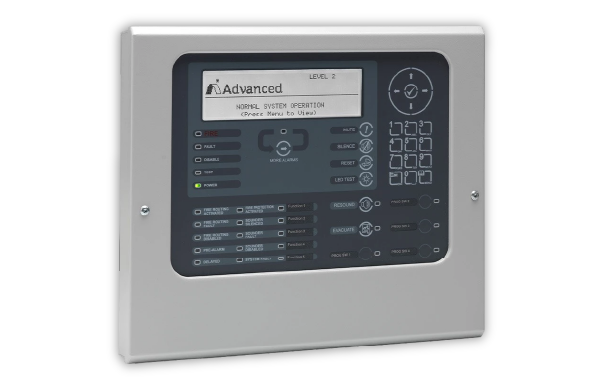
Addressable Fire Alarm Systems
An addressable fire alarm provides much more detailed information about what is happening within the system.
Each compatible device has its own address, allowing the fire alarm panel to identify the individual detector, call point or other device that has activated.
This can make locating an activation considerably easier, particularly across larger premises.
Addressable systems are commonly used in:
- Large offices
- Factories
- Warehouses
- Schools and colleges
- Hotels
- Larger retail premises
- Multi-storey buildings
- Commercial developments
- Sites containing multiple buildings
- Complex industrial premises
Fire Alarm Detection & Devices
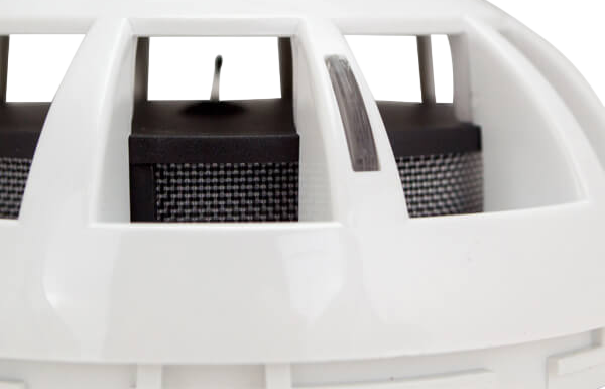
Smoke Detectors
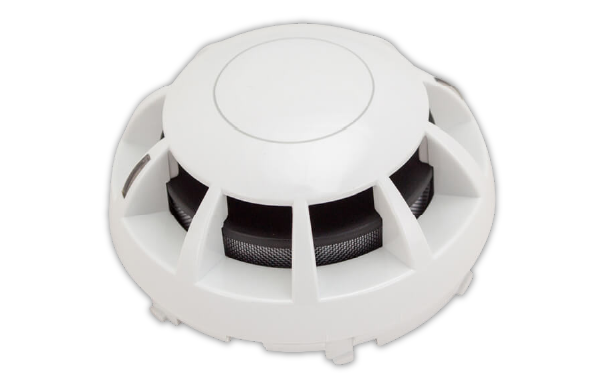
Designed to detect the presence of smoke and provide an early warning of fire.
Different detection technologies may be appropriate depending on the environment.
Heat Detectors
Heat detection can be more appropriate in areas where smoke or airborne contaminants may cause unwanted alarms.
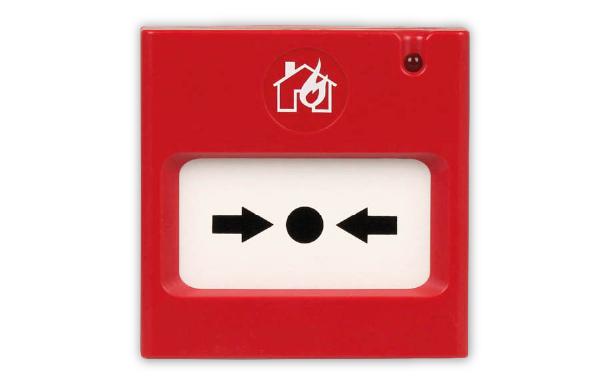
Manual Call Points
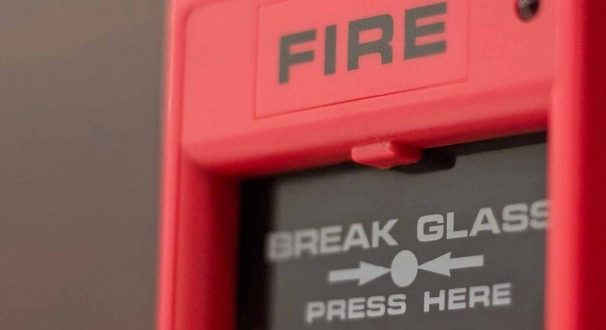
Manual call points allow somebody who discovers a fire to activate the alarm.
Sounders
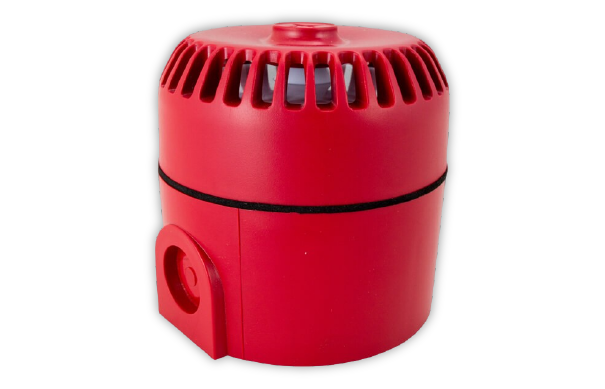
Fire alarm sounders provide the audible warning required to alert building occupants.
Visual Alarm Devices
Visual alarm devices can provide an additional visual warning where required.
Fire Alarm Control Panels
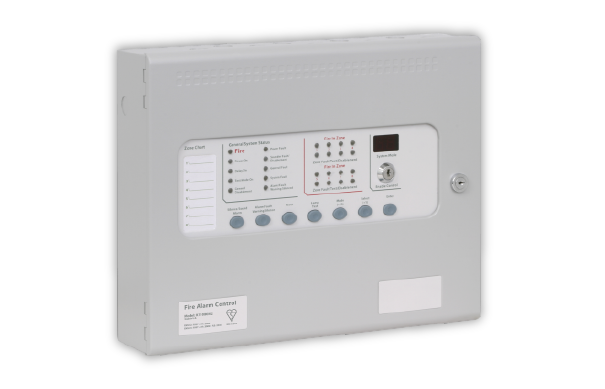
The control panel is at the centre of the fire alarm system, monitoring devices and displaying alarm, fault and system information.
Interfaces
Fire alarms can also be designed to interact with other systems within a building where required.
Fire Alarm Integration
Depending on the premises and system design, your fire alarm may need to interface with other equipment.
This could include:
- Access-control systems
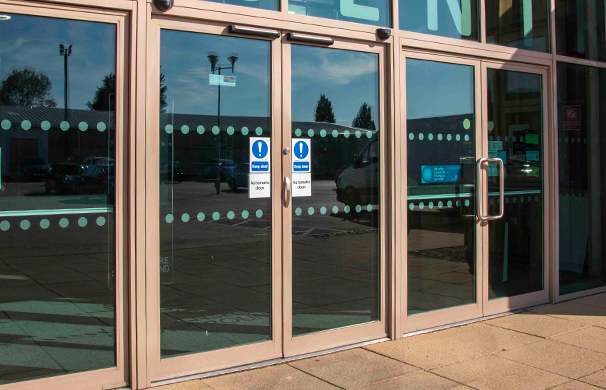
- Automatic doors
- Smoke control systems
- Lifts
- Gas shut-off systems
- Plant or machinery
- Building management systems
- Remote monitoring equipment
For example, certain controlled doors may need to release when the fire alarm activates so they do not obstruct escape.
We can discuss the interfaces required as part of the system design.

What Fire Alarm Category Do I Need?
You may have come across terms such as L1, L2, L3 or P1 when discussing commercial fire alarms.
These refer to different categories of system and the objective the fire alarm is intended to achieve.
The category required should be established based on the fire strategy, fire risk assessment or other appropriate design requirements rather than simply selected because one category is deemed better than another.
Category M Fire Alarms
A Category M system is based on manual activation.
People within the building raise the alarm using manual call points when a fire is discovered.
Category L Fire Alarms
Category L systems are principally intended for protection of life.
L1 – Automatic fire detection is provided throughout the premises.
L2 – Automatic fire detection is installed within defined areas in addition to the areas covered by an L3 system.
L3 – Automatic detection is arranged with the objective of giving warning before escape routes become affected by fire.
L4 – Automatic detection is primarily provided within escape routes.
L5 – Detection is installed to achieve a specific fire safety objective in particular areas or circumstances.
Category P Fire Alarms
Category P systems are primarily concerned with property protection.
P1 – Automatic fire detection is provided throughout the building.
P2 – Automatic fire detection is provided within defined parts of the building.
Don't know which category you require?
That’s normal.
Your fire alarm category should be based on the requirements of the premises rather than guessed.
If you already have a fire risk assessment, consultant’s specification or fire strategy, we can work from that information.
Do I Legally Need a Fire Alarm in My Business?
The answer depends on the premises and its fire risk.
In England, employers, owners, landlords, occupiers and others with control of non-domestic premises can have responsibilities for fire safety as the Responsible Person.
The Responsible Person must carry out and regularly review a fire risk assessment, which identifies the measures required to prevent fire and keep people safe.
That means it’s better not to make a blanket statement that every commercial building legally requires a particular type of automatic fire alarm.
The appropriate fire detection and warning arrangements should reflect the risks and requirements of the building.
If your fire risk assessment specifies a particular fire alarm category or improvement, Lincoln Security can provide a quotation for the required work.
Please note: Lincoln Security installs and maintains fire alarm systems only. Where a formal fire risk assessment or specialist fire-engineering advice is required, this should be completed by an appropriately competent person.
Fire Alarm Installation for Different Types of Business
We install commercial fire alarm systems for a wide range of premises, including offices, warehouses, factories, retail units, schools, hospitality venues and commercial properties.
Every building is different, so we design the system around the size, layout, occupancy and fire safety requirements of your premises.
Why Choose Lincoln Security for Your Fire Alarm?
BAFE Registered for Fire Detection & Alarm Systems
Lincoln Security is BAFE registered for the design, installation, commissioning and maintenance of fire detection and alarm systems.
This provides independent reassurance that our fire alarm work is assessed against recognised industry standards and competency requirements.
Verify our BAFE status here using our Registered Number 303035
Frequently Asked Questions
There isn’t a meaningful single price for a commercial fire alarm installation.
Cost is affected by the size and layout of the building, system type, fire alarm category, number of devices, cabling requirements, interfaces and the complexity of installation.
For that reason, we normally recommend a survey before providing an installation quotation.
Conventional systems can be well suited to smaller, straightforward premises.
Addressable systems provide individual device information and are generally more suitable where the premises are larger or more complex.
We’ll recommend a system based on your requirements rather than automatically pushing you towards one technology.
Yes.
We can assess an existing commercial fire alarm and advise on replacement or upgrading.
Where appropriate, some existing infrastructure may be capable of being retained, but this needs to be established following assessment of the system.
Potentially, yes.
We can inspect an existing installation to determine whether we’re able to take over its maintenance.
Any faults or remedial work identified would be discussed with you.
In many cases, yes.
Whether an existing system can be extended depends on the equipment installed, system capacity and the requirements of the altered building.
We’ll assess the current installation before recommending a solution.
BS 5839-1 is the British Standard code of practice covering the design, installation, commissioning and maintenance of fire detection and fire alarm systems in non-domestic premises. The current edition is BS 5839-1:2025.
Not necessarily.
L1 is one category of life-protection fire alarm system. The required category should come from the requirements of the premises, such as the fire risk assessment, fire strategy or specification.
You shouldn’t simply install an L1 system because it sounds like the highest level.
The appropriate testing and maintenance arrangements depend on the system and applicable fire safety requirements. BS 5839-1 includes recommendations for the maintenance of fire detection and alarm systems in non-domestic premises.
We can discuss an appropriate maintenance arrangement when installing or taking over your system.
Yes, depending on the system design.
Commercial fire alarms may be interfaced with systems such as door releases, access control, smoke control equipment, lifts or other safety-related building systems.
We’ll establish any required interfaces during the design process.
If you already have a fire strategy, specification or fire risk assessment, we can use that information when designing your system. If you’re unsure what your premises requires, we can recommend an independent specialist before we prepare a fire alarm proposal.